
Castleacre specialises in protecting period properties, heritage houses, and protected structures. We know just how much hard work and time the owners invest in looking after these buildings, breathing life into them and helping them remain integral to Ireland’s cultural and community history.
Each month, we will focus on the story behind one of these beautiful character homes. We spoke with Niamh and Richard Marsh at Lisnabrin House co. Cork.
Lisnabrin House and the quiet work of preserving Irish heritage
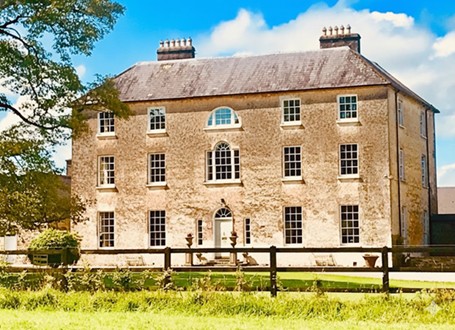
Lisnabrin House rises gently from the Irish countryside, its Georgian form largely unchanged since it was built in 1720. Three centuries later, it remains a place shaped by memory, community and care. Today, under the stewardship of owners Niamh and Richard Marsh, Lisnabrin stands as an example of how heritage can be preserved without being silenced.
When the Marsh family’s search began in 2008, it became a two-year journey through properties steeped in history, yet waiting for the right family to bring them back to life. In 2010, they found Lisnabrin House. Its walls were sound, its presence strong, and its story still intact. They committed to many years of sympathetic restoration, not to modernise its character away, but to preserve it carefully, employing traditional methods to honour the home’s past while securing its future
Lisnabrin was originally built for the Croker family and retains many of its demesne features, including walled gardens and outbuildings. These structures provide more than architectural context; they speak to a way of life that once revolved around the house. In rural Ireland, country houses were not isolated symbols of status but working centres of local life, employing craftspeople, hosting gatherings and anchoring communities.
That sense of connection has never fully faded here.
For the Marshes, preserving Lisnabrin has always meant honouring its place within the local community. Stories continue to surface, passed down through families whose connections to the house stretch back generations. In one testament to this living history, Niamh recalls an encounter that confirmed the enduring bond between the house and the people around it.
“An elderly gentleman approached us and asked, ‘Would you mind if I sit in the dance hall? I met my wife here, and she passed away last week,” she says. “The house still holds those memories.”
That former dance hall, active in the late 1950s, remains part of Lisnabrin’s story, not as a forgotten room, but as a space where love, loss and community once gathered, and still echo quietly today.
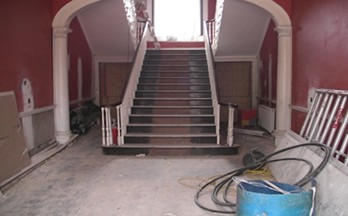
Before Main Hall
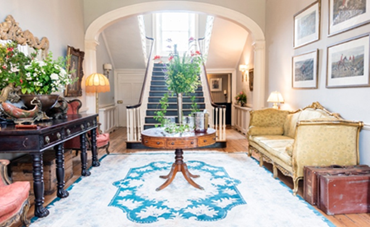
After Main Hall
Primarily, their family home, they continue to open its doors during the summer months, welcoming guests from all over the world. Lisnabrin helps to generate a portion of the income required to maintain its structure and craftsmanship, a path increasingly taken by owners of heritage homes across the country.
Preserving the brickwork and structure was a commitment Niamh and Richard made the day they found Lisnabrin. But they feel that true preservation goes beyond maintenance; it’s about keeping the doors open. They’ve chosen to share their home so that others can continue to experience the quiet beauty and history that make these old buildings so special.
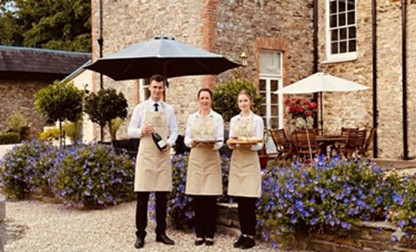
Lisnabrin is a place where the past is present yet softened by contemporary comforts. Sunlight warms polished antiques in the formal rooms, laughter drifts across the courtyard terrace as guests unwind with a drink, and evenings end curled on a sofa by the fire after long walks through the surrounding countryside.
Preservation and progress exist here side by side.
Securing the future of a house like this requires thinking beyond traditional solutions. At Lisnabrin, sustainability is approached in practical, locally rooted ways: biomass fuel grown on the farm provides the sole source of heating and hot water for the house, while solar panels installed on the farm sheds support its ongoing energy needs. These measures allow the house to be comfortably lived in today, without placing strain on its historic fabric or surroundings.
Lisnabrin stands quietly, doing what it has always done: holding stories, welcoming voices, and inviting every guest to write their own page in its living history, and evolve responsibly with its environment.
Every guest becomes part of Lisnabrin’s ongoing story.