
Castleacre’s House of the Month – Stories in the Stone: The History of Kilcarby Mill
Castleacre’s House of the Month – Stories in the Stone: The History of Kilcarby Mill
- 30 March 2026
- Comments: 0
- Posted by: Castleacre
The Story in Time of how the Mill Store transformed from Workhouse to Warm Home
On a quiet bend of the River Boro near Enniscorthy, a stone building has stood for almost two hundred years. Many generations worked there, and while industry came and went, the building is once again a warm and lively home.
The story of Kilcarby Mill stretches back far beyond the nineteenth century, in 1610 the history of the Mill began with the Sparrow family. A new mill was built on the site in 1780 and this mill was then expanded by Francis Davis when he acquired it sometime after 1808. After Francis Davis died in 1863 his successors further expanded the mill when they built the grain store in 1876. Already respected millers in the Enniscorthy area, the Davis family created more than just a place to grind grain.
By 1876, Kilcarby Mill had become a substantial endeavour which was the lifeblood of the community, a hub where farmers, workers, and families gathered, and where the rhythm of daily life flowed alongside the turning water wheels. Wagons and skiffs arrived daily carrying grain, workers kept the machinery moving, and the steady hum of industry became part of the landscape.
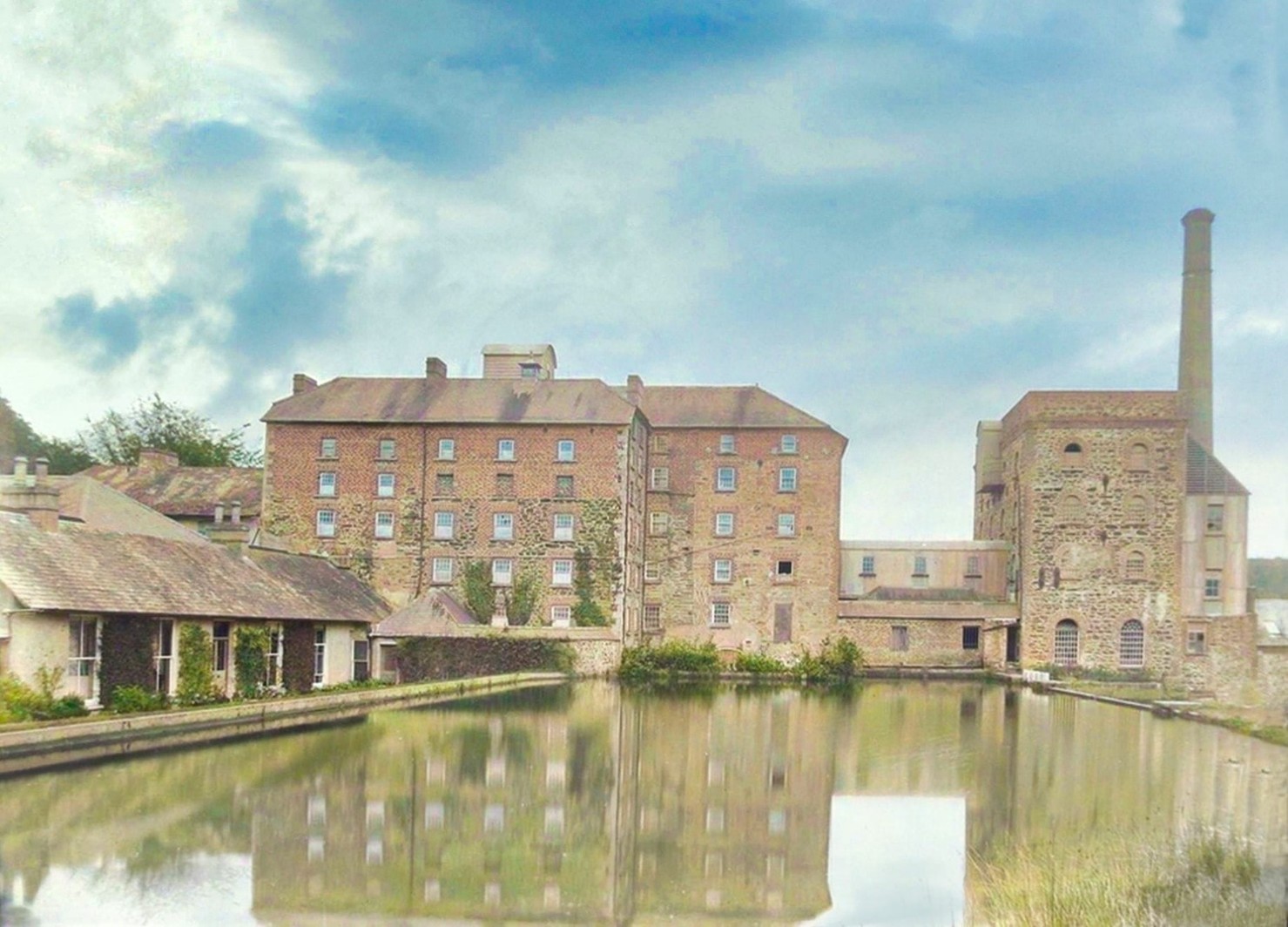
Like many historic mills across Ireland, Kilcarby has adapted to changing times. When the railway was extended to Wexford town, it became more efficient to abandon Kilcarby and build a new mill closer to Enniscorthy, where there was direct access to the railway. The Kilcarby site was sold and converted into a hydroelectric power station, supplying electricity to the Enniscorthy asylum. The rushing river that had once driven milling equipment was now harnessed to produce electricity, marking a new chapter in the building’s evolving story.
In the early twentieth century, another unexpected role emerged when the mill became a tobacco curing station, processing locally grown tobacco during a time when Ireland experimented with expanding domestic agriculture. This unusual industry was short-lived, but it left yet another imprint on the building’s history.
By 1945, the mill had taken on yet another identity. It became a cleaning and packing facility for the County Wexford Beekeepers’ Co-Operative Society, reflecting the region’s thriving honey production at the time. The old industrial rooms, once filled with milling machinery, were now used to process honey and beeswax products before distribution across the country.
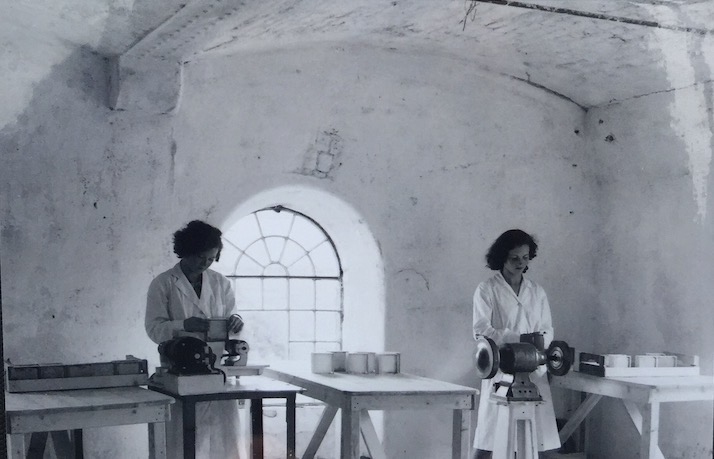
Yet as decades passed, the pace of industry slowed. By the late twentieth century, parts of the once busy complex fell quiet. Some buildings remained in use while others gradually fell into disrepair, their stone walls standing as reminders of Wexford’s industrious past.
That quiet chapter changed in 2015, when Stephen Hegarty and his wife purchased the old mill store. His wife comes from the Doyle family, a well-known Wexford name with deep ties to the local community, and together they saw potential where others might only have seen an ageing industrial structure.
For Stephen, the attraction was immediate. The building carried a sense of character that could not be replicated.
“It was such an unusual building,” he explains. “You could feel the history in it the moment you stepped inside. We knew it would be a big project, but we also felt it deserved to be brought back to life.”
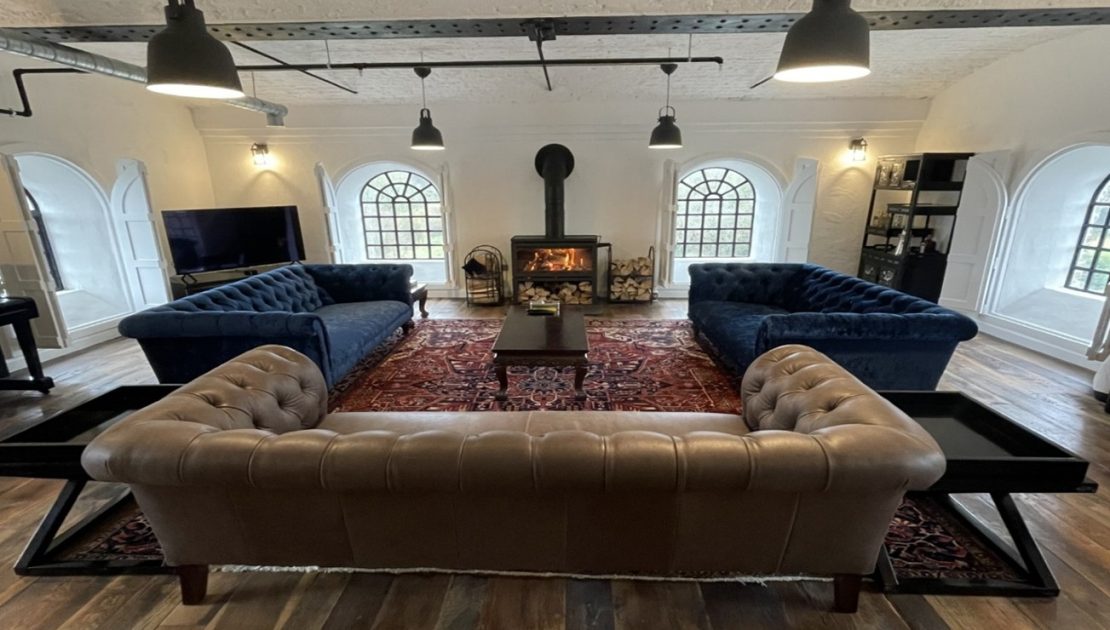
What followed was an ambitious year-and-a-half restoration, transforming the old mill into a four-bedroom family home while carefully respecting its historic fabric and structure.
The previous owner had stripped out walls and stairs, leaving Stephen to essentially start from scratch. Every step on the stairway had to be rebuilt, the walls replastered, and the original stone carefully washed and restored.
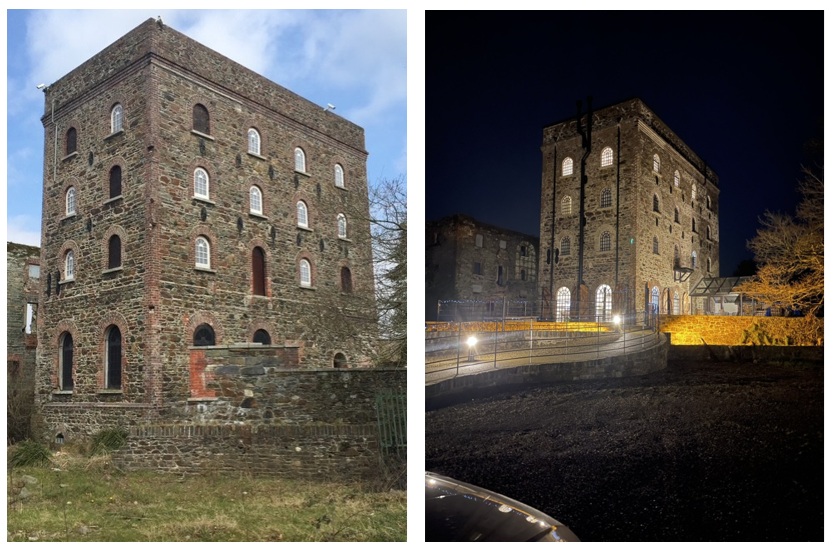
A journey to restoration is not without its challenges
Kilcarby mill is a protected structure which is located within both a flood zone and a special area of conservation. The building had originally been designed for industrial use but lacked any form of septic system. Converting it into a residential home meant ensuring the structure could be adapted while preserving its historic character.
Specialist materials and traditional techniques were also required to maintain the integrity of the stonework and internal structure. While a lot of these skills are still present in Wexford, Stephen had to source the metal windows needed to complete the project properly from the UK.
Despite the logistical hurdles, the restoration slowly revealed the building’s potential. Original stone walls were preserved, the tall spaces of the mill were carefully adapted, and what had once been an industrial interior gradually became a welcoming home.
Stephen often finds that the building still draws people back, many of them carrying personal memories connected to the old mill.
“People walking through the townland often stop and ask about it,” he says. “Some will tell you their father or grandfather worked here years ago, or that they remember coming here as children. It is lovely to hear those stories. You realise the building is not just ours now, it belongs to the memories of the whole community.”
From grinding grain in the 1830s to generating electricity for an asylum, to processing tobacco and packing honey, and finally becoming a family home, the mill has lived many lives. Through each chapter, the River Boro has continued to flow beside it, steady and unchanged.